TL;DR
If a blocked drain clears after rodding but comes back within a few weeks — slow-draining sinks, gurgling, a lingering smell from an outside gully — the underlying build-up almost certainly wasn't fully removed. Drain rods punch a channel through a blockage; high-pressure jetting scours the full internal diameter of the pipe clean, which is why it tends to hold up far longer against grease, scale and root ingress. If your drains keep blocking, request a fixed-price quote for jetting online and we'll assess whether jetting alone will do it or whether a camera survey should come first.
The Signs a Blockage Is Coming Back
A blockage that's been properly cleared shouldn't reappear within weeks. Watch for:
- Sinks, baths or showers draining slower than they did right after the last visit
- Gurgling from a toilet, plughole or outside gully when another appliance drains nearby
- A smell around an external gully or manhole that keeps returning
- The same fitting blocking repeatedly while others in the house stay fine, which suggests the problem sits in one specific run rather than the whole system
Any of these within a month or two of a rodding job usually means the blockage was pushed aside rather than removed.
Why Rodding Alone Often Doesn't Last
Drain rods work by pushing a flexible rod, often with a corkscrew or plunger head, through the blockage to break it up or force a channel through it. That's genuinely effective for a soft, localised obstruction — but it has a structural limitation: rods clear a path through the middle of the pipe, not the walls.
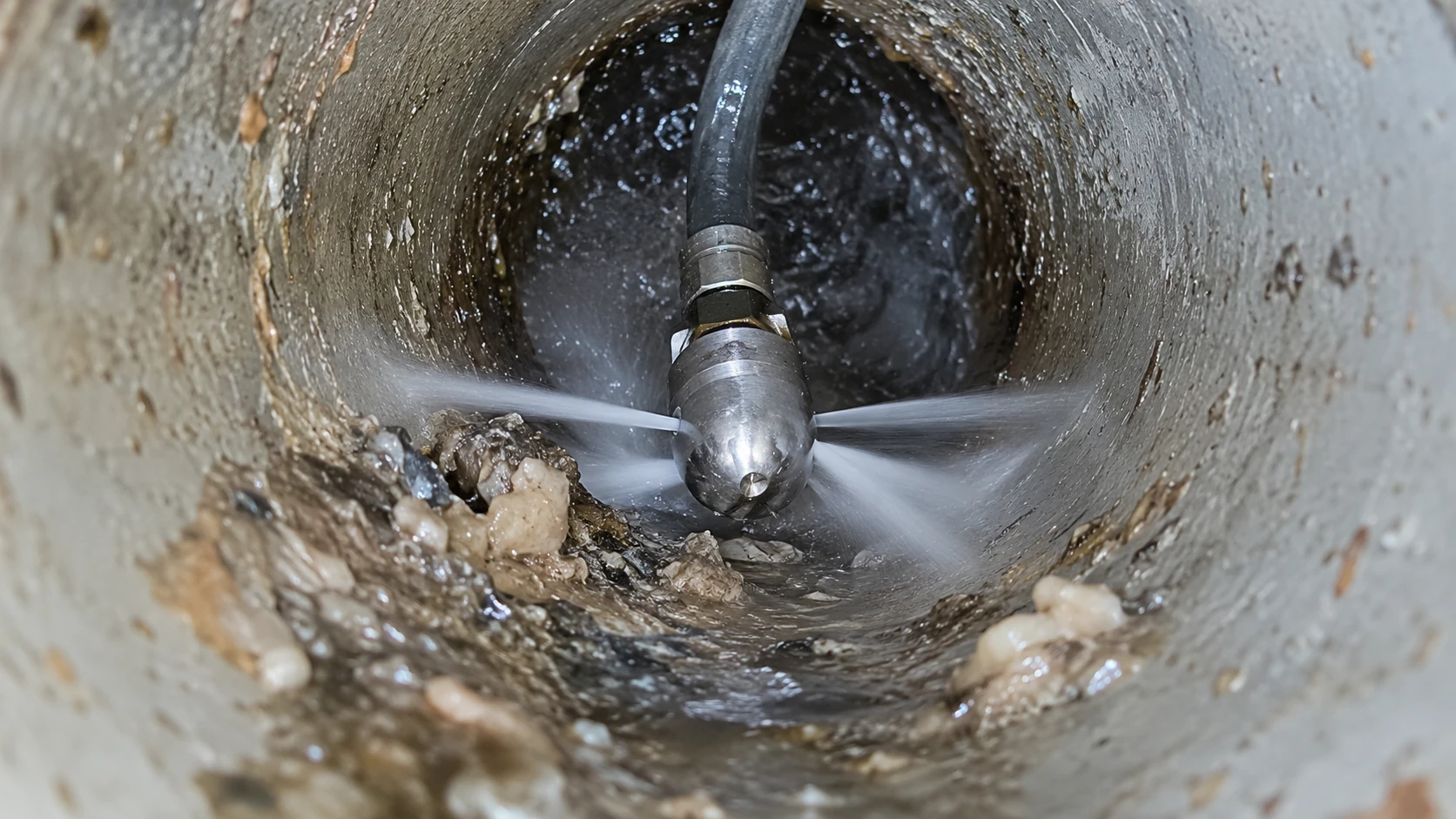
Grease and fat that has cooled and stuck to the pipe wall, scale build-up narrowing the bore, and the fine root hairs that work their way into old clay joints all tend to survive rodding around the edges even when the centre of the pipe is punched clear. Flow returns to normal almost immediately, which is exactly why it feels like the job's done, but the material left on the walls keeps catching debris and the drain narrows again over the following weeks.
How High-Pressure Jetting Clears the Full Bore
High-pressure water jetting works differently. A jetting hose is fed into the drain with a rotating nozzle at the end that fires water at high pressure in multiple directions as it's drawn back through the pipe. Instead of punching a channel, it scours the entire internal circumference, walls included, flushing loosened material all the way through to the next chamber or the sewer connection.
That's particularly effective against the three causes we see most often on domestic jobs:
- Grease and fat, common in kitchen waste runs, which jetting breaks up and flushes rather than just displaces
- Root ingress, where fine roots have worked into a joint or crack — jetting strips root growth back from the pipe wall in a way rodding generally can't
- Scale and silt, the layered build-up that gradually narrows the bore of older pipework
For domestic jetting jobs specifically, this is usually the difference between a blockage that's gone for good and one that's back within the month.
When Jetting Is the Right Call — and When You Need More
Jetting is the right first step for a recurring soft blockage with no obvious structural cause. But it isn't the answer to everything.
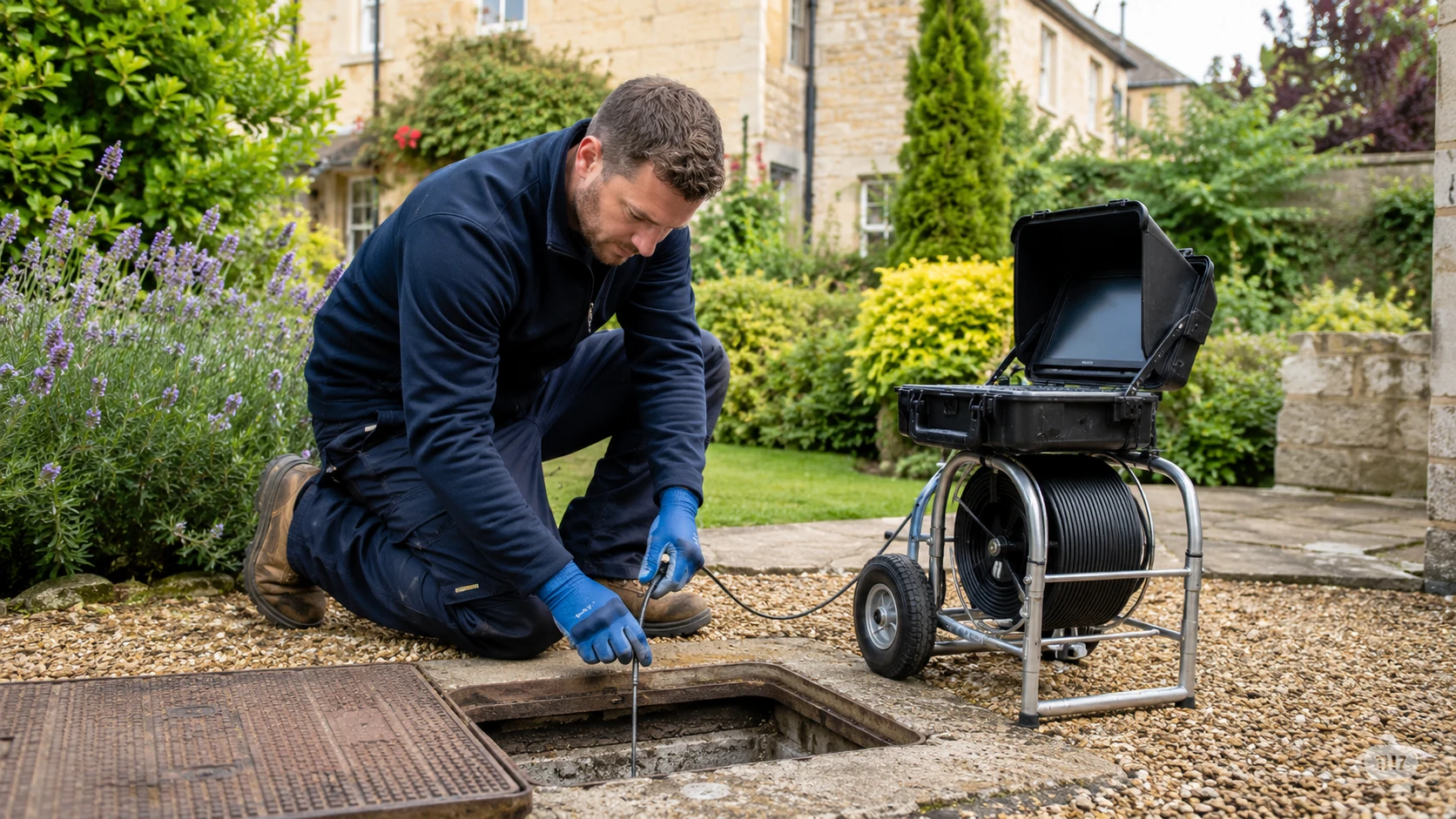
- If a drain keeps blocking in exactly the same spot even after jetting, that points to a structural issue — a cracked pipe, a displaced joint, or a significant bellied section holding standing water — and a CCTV drain survey is the right next step to confirm what's actually there before spending more on repeat clearances.
- If the survey does find a structural defect, that's a job for drain repairs rather than further jetting, since no amount of cleaning fixes a broken pipe.
Getting the sequence right — clear it, and if it comes back, look before you clear it again — saves paying for the same job twice.
Hard Water and Shallow Falls: Two Local Reasons Blockages Return
Two things about Bath in particular make repeat blockages more likely here than the national picture would suggest, and both of them favour jetting over rods.
The first is water hardness. Bath sits on oolitic limestone and the water here is hard, so pipework gradually picks up a mineral scale on its inner surface over years of use. Scale rarely blocks a drain by itself, but it roughens and narrows the bore so that grease, silt and debris have something to cling to. That layer is exactly what rods slide past and what a rotating jetting nozzle strips away.
The second is gradient. Bath is built across a steep river valley, so falls vary enormously from street to street. On the hillside runs around Larkhall and above Oldfield Park, a drain may fall steeply enough to carry water away faster than it carries solids, while runs down on the valley floor near the Avon are often much flatter, and a shallow fall lets silt settle instead of flushing through. Flat runs of that kind are classic repeat offenders — they clear easily, then silt up again on a fairly predictable cycle, because rodding tends to move the material along to the next low point rather than out of the system.
None of that means every blockage in Bath needs jetting rather than rodding. Plenty of one-off blockages clear perfectly well with rods and never come back. It's specifically the repeat offenders, the drains that block again within weeks of being cleared, where jetting tends to be the more durable fix.
Getting Help With a Recurring Blockage
If you've had a drain rodded more than once for the same problem, that repetition is the signal worth acting on rather than booking a third rodding visit. Our related post on drain jetting versus drain rods goes into more detail on when jetting beats rods for good, and is worth reading if you want the fuller comparison before deciding.
Request a fixed-price quote for jetting or a diagnostic survey online and tell us how often the blockage has returned — that history helps us recommend the right starting point rather than guessing.
FAQ
Is high-pressure jetting safe for old or clay pipework?
Jetting pressure is adjusted to suit the pipe material and condition. On older or more fragile clay runs, a lower pressure setting clears the same build-up without risking further damage, which is one reason a quick assessment of the pipe first is useful.
How often should drains be jetted?
There's no blanket schedule — it depends on usage and what's causing the build-up. A kitchen run serving a busy household may need attention more often than a bathroom waste. If a drain keeps blocking on a predictable cycle, that pattern itself is worth flagging when you get in touch.
Can jetting fix a cracked pipe?
No. Jetting clears blockages caused by material inside the pipe — grease, scale, roots, debris — but it can't repair a structural defect like a crack or displaced joint. That needs a survey to confirm, followed by a proper repair.
Why did rodding work last time but not this time?
Rodding can genuinely clear a one-off blockage for good. If the same drain has now blocked more than once, it usually means there's residual build-up on the pipe walls that rodding didn't remove, which is exactly the situation jetting is built to deal with.