Skip to content
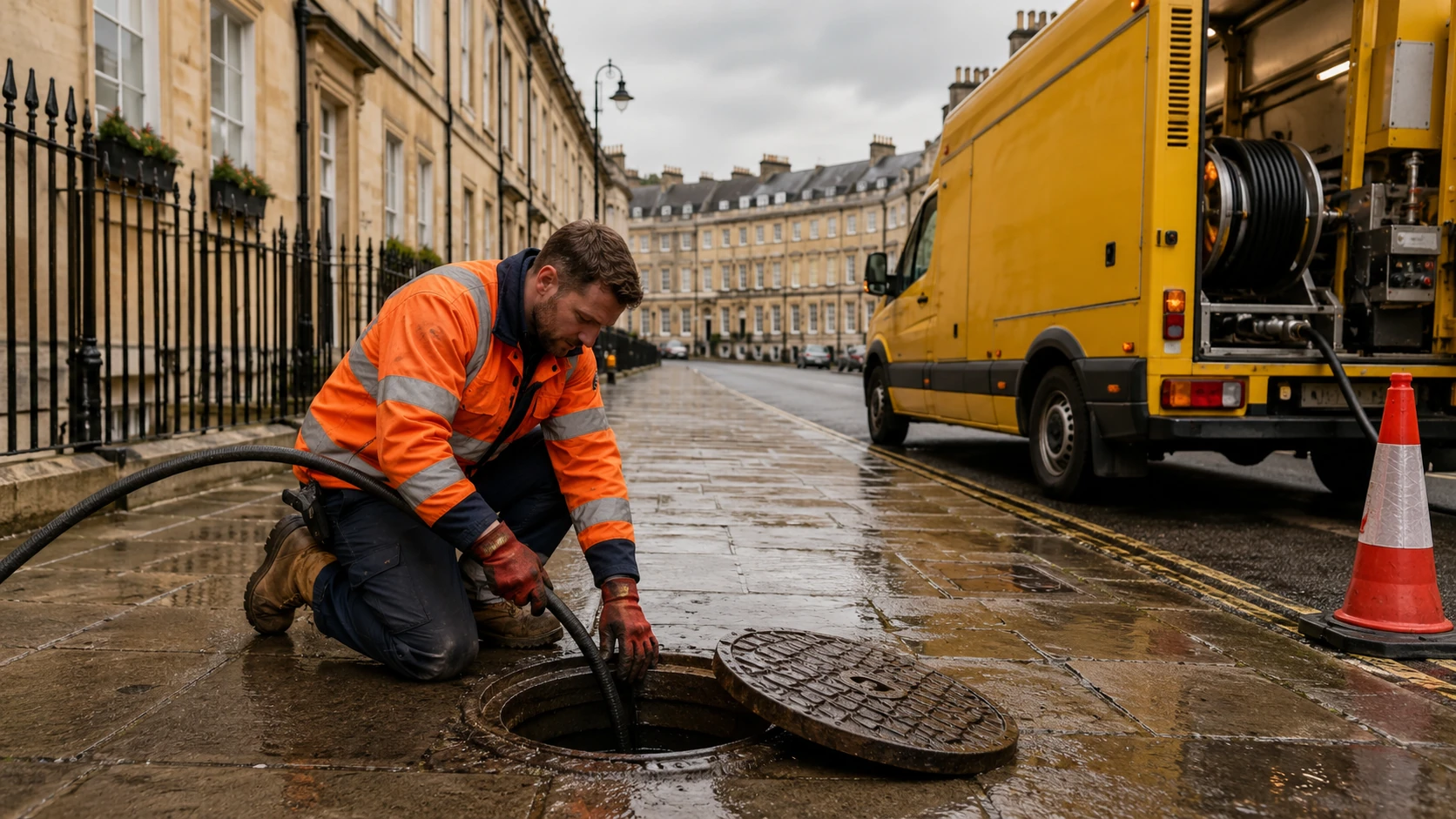
Professional Bath Plumbers drainage engineer on a residential street in Bath, Somerset
Trusted local drainage specialists

Blocked Drains in Radstock

Local engineers available across Radstock and surrounding areas for urgent and planned drainage work.

  • Fast response across Radstock
  • Fixed pricing with no hidden extras
  • Fully insured drainage engineers
  • 24/7 emergency availability
Fast responseFixed pricingFully insuredLocal engineers

Request your free quote

Free, no-obligation — we'll call you back fast.

Local response in Radstock

We attend homes and businesses across Radstock with rapid callout availability and clear fixed pricing.

  • Typical urgent response target: same day
  • Common callouts: blocked sinks, toilets, and outside drains
  • Coverage includes nearby neighbourhoods and links roads

Drainage in Radstock

Radstock's mining heritage profoundly shapes its drainage infrastructure. The town sits amid the former Somerset coalfield, and many properties occupy what were once colliery sites—sections of concentrated underground infrastructure where original drainage routes can be complex and sometimes poorly understood. Former mill and colliery buildings now serve as apartments or offices, but the original configuration often remains, creating maintenance challenges.

The terrain around Radstock rises and falls across the old coalfield landscape, particularly towards Writhlington and Clandown. This topography creates natural surface water management challenges. Properties on higher ground can experience slow drainage as water must flow downhill over considerable distances, while lower-lying locations can suffer from receiving water from properties upslope. This creates pressure issues that can damage ageing pipework.

Radstock's property mix is diverse: traditional stone terraces in older parts of the town, 1930s suburban properties in locations like Westfield and Haydon, and newer developments toward the town's edges. Each era features different drainage materials and designs. Victorian stone terraces often use slate or clay drainage; 1930s properties might use a mix of materials; newer developments typically feature PVC systems. Our engineers must understand all these variations.

The area's industrial past means some unexpected obstacles remain underground. Disused mine workings, former colliery sites, and old railway infrastructure sometimes run beneath properties, affecting drainage routing and creating challenges during renovation or repair work. Historic records can be incomplete, making thorough surveying essential before significant work.

Radstock's weather patterns also affect drainage. The exposed hillside position means parts of the town receive heavier rainfall run-off than the valley floor. Surface water management becomes critical, particularly in terraced property locations where residential gardens are small and surface water must drain efficiently.

Understanding Radstock's unique drainage context—industrial heritage, variable terrain, mixed property types, and hillside exposure—helps property owners implement appropriate strategies. Whether dealing with former colliery site complexity, terraced property shared drainage, or suburban challenges in elevated locations, Radstock residents benefit from drainage expertise that understands the town's distinctive character.
Areas and landmarks we serve near Radstock

Radstock Museumthe Colliers Way cycle routeRadstock MarketWestfieldHaydonWrithlingtonClandown

Recent case study in Radstock

Emergency call-out to a former colliery building near Writhlington: A converted apartment experienced raw sewage in the basement during heavy rain. Our survey revealed the original multi-building industrial drainage configuration still partially in place, with redundant routes creating sediment traps. Recent conversion work had partially blocked one historic route, concentrating flow through ageing pipes. We carefully mapped the system, isolated redundant routes, and cleared blockages. The building's owners agreed to fund main line relining for the shared structure. Result: resolved raw sewage issue and established maintenance schedule for the shared system. Tip: Former industrial buildings always have complex heritage drainage—professional mapping essential.

Radstock drainage FAQs

What special challenges do Radstock's former colliery-site properties face?

Properties on former colliery sites typically sit above complex original industrial drainage that may serve multiple separate buildings or have redundant routes. Conversions to residential or office use often add new load to old infrastructure. We recommend thorough CCTV survey of these properties to map the full system before problems develop—industrial-era surprises are common.

How does Radstock's hillside terrain affect drainage?

The rise and fall of the old coalfield landscape towards Writhlington and Clandown means surface water management is crucial. Water must travel considerable distances downhill, creating pressure on ageing pipes. Preventative maintenance and regular clearing helps prevent overflow issues.

Why is CCTV survey particularly important for older Radstock properties?

Radstock's mining heritage means historic drainage may be poorly documented. Disused workings, former colliery sites, and old infrastructure sometimes remain underground. CCTV survey reveals the actual drainage routing and condition, preventing surprises when renovation work begins. This is especially important before purchasing older properties.

Get a Free Quote